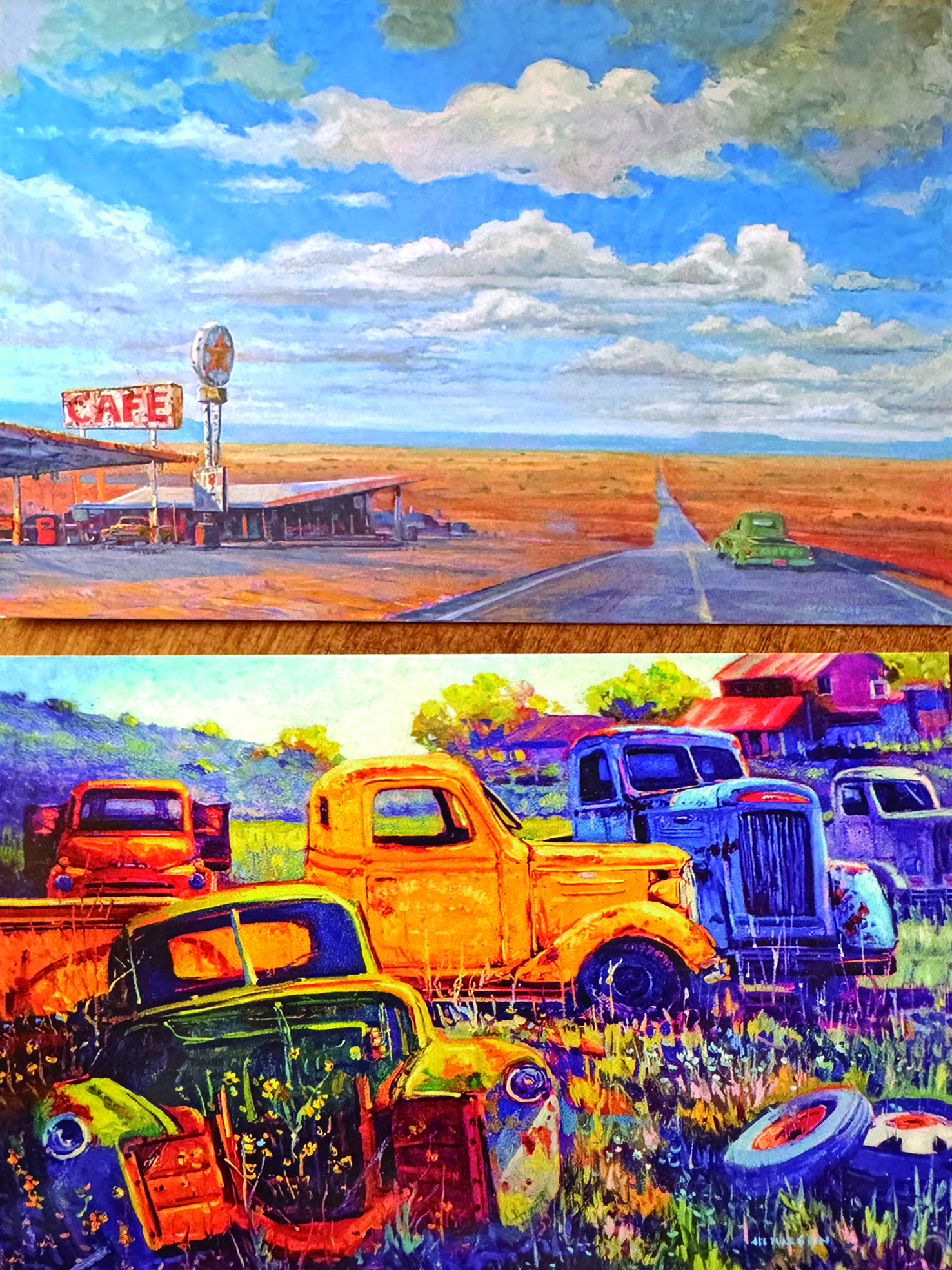
I feel like the trajectory of my life happened on one of those old kitschy postcards with a map of Route 66. When we were kids in the ’60s and ’70s, there was nothing like piling into the old Dodge station wagon we’d named Beulah and fighting over who got to ride in the rear-facing seat, that we called the “back of the back,” heading out on a road trip. I grew up following the distinctive black and white shield highway sign through New Mexico and Arizona, and it took us everywhere: Pueblos, national monuments, diners serving old-school cooking, small towns that still feel like themselves fifty years later, and our relatives along the way.
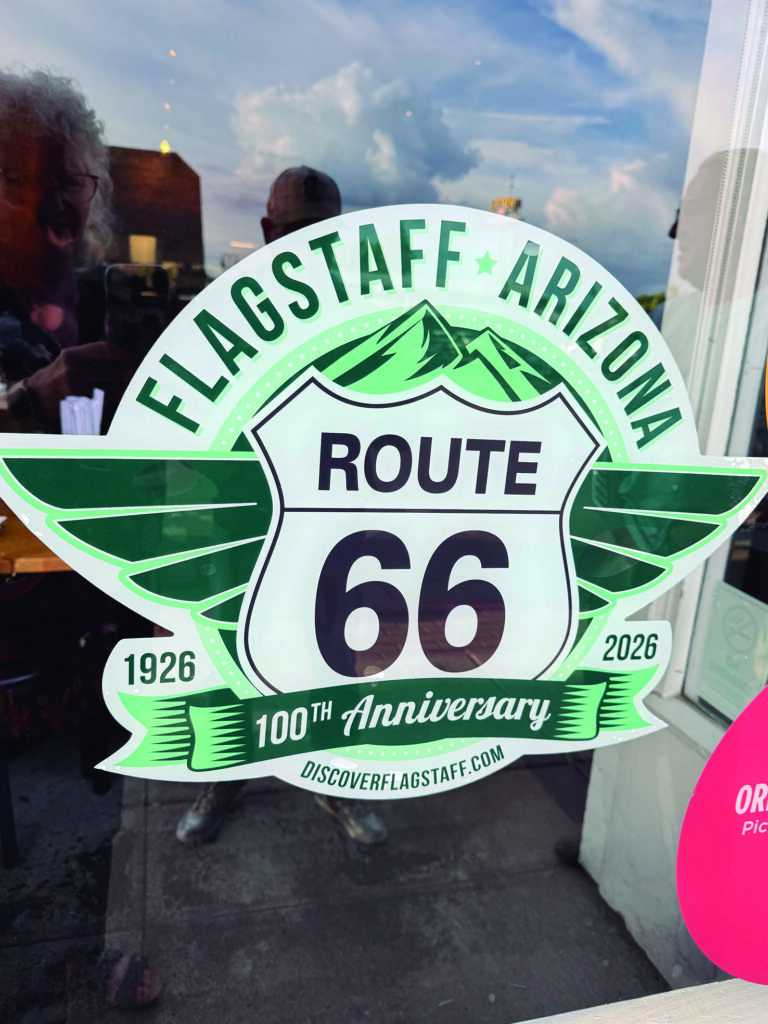
The iconic stuff of road trip dreams, Route 66, turns 100 years old on November 11, 2026. In The Grapes of Wrath, John Steinbeck called it the “Mother Road”. Bobby Troup immortalized it in his iconic song, inspiring us to kick up our heels and travel on Route Six Six. For my family, it was just the road home.
A great place to start your own Route 66 adventure is Albuquerque’s historic plaza.
It is framed with locals resting on cast iron benches in the shade of centuries-old cottonwoods. Our favorite restaurant there to get a taste of real local New Mexico favorites, La Placita, has since closed, but the Church Street Café still serves up carne adovada and Navajo tacos that satisfy to “light your fire,” as my dad used to say.
Heading west, next was Gallup, which holds a special place in my heart. It’s where my maternal grandfather’s family was from. The great sandstone cliffs outside of town looked to me like nature’s cathedrals, and downtown still has shops purveying the authentic Navajo and Hopi silver jewelry and soft leather moccasins I remember browsing as a kid. We’d get red chili at Earl’s Family Restaurant, or “Christmas style,” red and green together, because we’d learned early that in New Mexico you eat red, and in Colorado you eat green.
Leaving Gallup behind, we always watched for the “Goodbye” sign fading into New Mexico in the rearview mirror, as we looked forward to see Arizona’s “Hello.” The souvenir stands strung along that stretch were part of the ritual, and Dad would let us browse, but not before reminding us to check where things were actually made. Most of what lined those shelves, we learned early, wasn’t; we called the tourist stuff “rubber tomahawks,” and dared each other to find the real turquoise hiding among it.
Long before we ever reached Exit 269, we were already counting them: the “HERE IT IS” signs with their grinning jackrabbits, planted every few miles like a scavenger hunt built just for the kids in the backseat. They were the mini billboards for the Jack Rabbit Trading Post at Exit 269 just outside of Joseph City, Arizona. Whoever spotted the last one first got bragging rights for the rest of the drive, and pulling into the actual trading post always felt like we’d won something.
The open road carries us past the Painted Desert and Petrified Forest, where we’d press our faces to the station wagon windows. Beneath the turquoise sky, the sunset-colored hills blazed like an Indian blanket draped across the horizon.
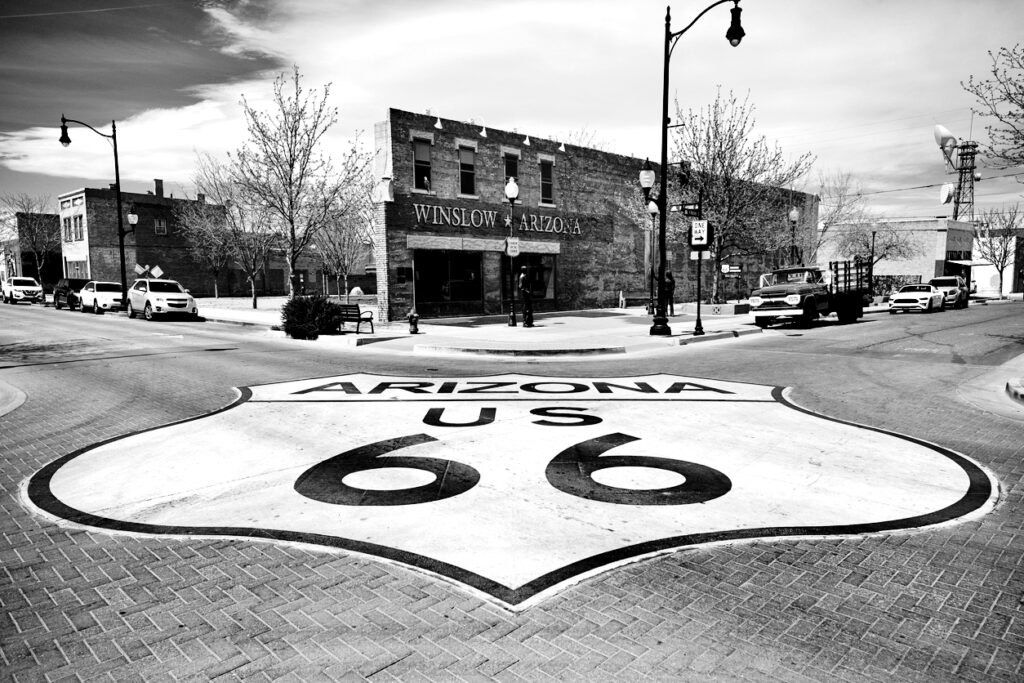
Winslow always meant one thing to me first: my mother’s grandparents’ white and green cottage, and the double swing creaking in the front yard where we’d fight over turns until someone’s mother called us in. Winslow was the Santa Fe’s bet to be the main hub for tourist activities in Northern Arizona—a bet that did not turn out to be true.
Flagstaff became the jumping off place, and Winslow was nearly forgotten until the grand old La Posada, designed by Mary Colter, was lovingly restored decades later. We’d stop in when we could, always for the same reason: the Turquoise Room’s Signature Soup, corn and bean side by side in the same bowl, a spoonful of chile cream swirled over the top. It tasted like a reason to slow down.
Somewhere past Winslow, the land would suddenly drop away towards Meteor Crater, a hole so big it swallowed the horizon, punched into the earth 50,000 years ago by a rock the size of a house moving faster than we could imagine. We’d stand at the rim and wonder about little green men and spaceships.
West from Meteor Crater the road climbs gently into the world’s largest Ponderosa pine forest, and into Flagstaff—the town I’d argue is the truest Route 66 town of them all, caught, like always, between the Santa Fe tracks and the old highway. Dozens of freight trains and even an Amtrak passenger train still lumber through the length of the town 24 hours a day. The downtown still looks the way I remember it: brick buildings from the turn of the century, a train station that still runs trains, and Miz Zip’s, where we’d land for New Mexico-leaning comfort food after a long stretch in the car.
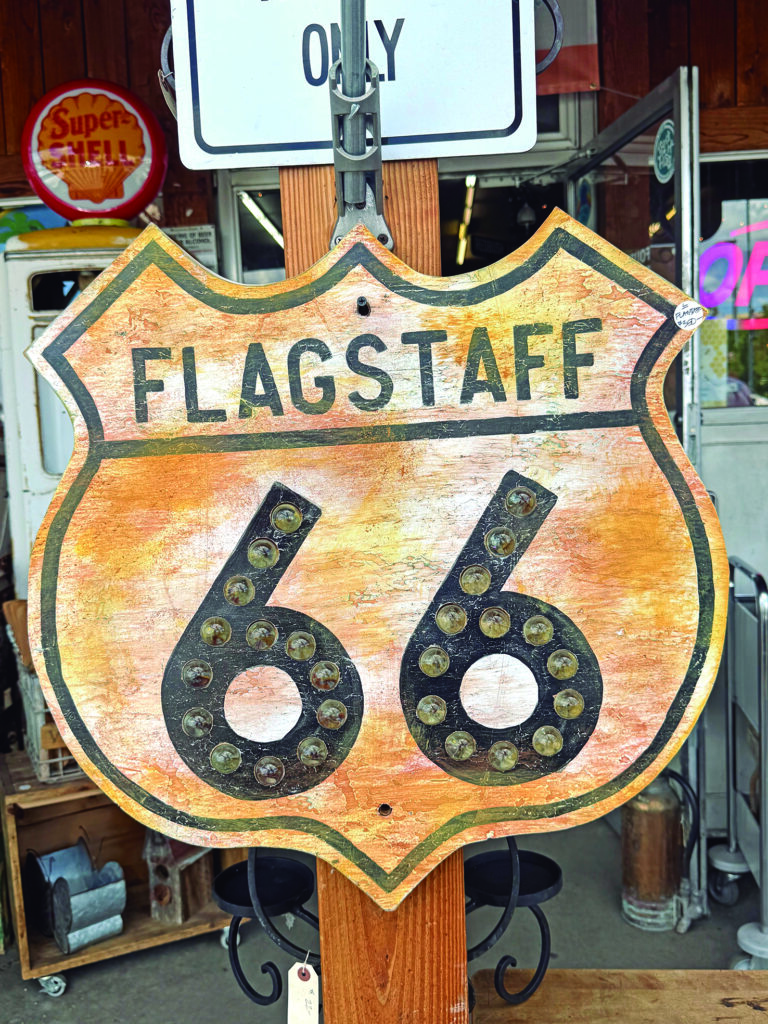
Somewhere along there was always a stop at local shops to get my fix of authentic Southwestern, Santa Fe RR and Rt 66 memorabilia. My favorite nowadays is Fourth Street Vintage, for an amazing collection of old metal signs, western snap shirts, pawn jewelry, and other fine “dustables”. Flagstaff meant we were close to home, and close to the mountains where the real adventures- the Peaks, the Grand Canyon, Sedona- were still waiting.
Williams always felt like the town time forgot on purpose. Originally, Williams was where the train from Phoenix via Wickenburg would come up north on the old Peavine rail line before it was abandoned. These days it’s the jumping-off point for the Grand Canyon Railway. We always make time to poke around Pete’s Route 66 Gas Station Museum before grabbing a mesquite-smoked burger and a seat outside at Cruiser’s Café, in what used to be somebody’s actual ‘30s filling station.
Seligman was where Arizona let us off the interstate for good, a town small enough that its diners felt like they were barely staying open, and waiting just for us. The cozy, vintage Cafés of Seligman worked their way into our stomachs and hearts as the reward for making it up the steep trail out of Havasupai Canyon on one of our biannual treks. The stunning turquoise travertine pools and waterfalls of Havasu Creek are one of the most beautiful places I have traveled the world over. It is my memories of those lazy days floating on the magnificent blue-green pools beneath the water tumbling over the red cliffs of this tributary to the Grand Canyon that take me back. After roughing it in the canyon backpacking and camping along Havasu Creek, we would be ready for the ‘50s diner food served up at Delgadillo’s Snow Cap. Here we’d get red or green chili, hot dogs and burgers with a classic chocolate shake. We just as often opted for the traditional chicken fried steak with gravy and all the fixin’s, followed, of course, by a slice of homemade pie at Westside Lilo’s Café. Just what we’d be craving after that long steep hike out of the canyon.
These are just a few of the stops that live in my memory now, postcards from a hundred different summers, stitched together by one long stretch of asphalt. For my family, Route 66 was never really about the destination. It was the road we kept coming back to, the one that always, eventually, brought us home.
Thank you for reading my stories in the Rocky Point Times all these years. I’m delighted to share that the second edition of my book, Back Roads, Dead Cats, and What’s for Dinner, will be on Amazon by the time you read this. It is packed with family stories, vintage photographs, and recipes, just in time for Route 66’s 100th birthday. Be sure to check it out at backroadspublishing.com or on Amazon, where you can get your own Kindle version or a paperback copy. It makes a wonderful gift for anyone who loves a good story and a good meal!