backroadspublishing.com
We have just arrived back in Peñasco for an extended visit and are trying to decide where to go for our much-needed seafood fix. It is the amazing variety, freshness, and quality of the gifts of the Sea of Cortez that make our choice both wonderful and challenging. It is “El Barco,” the Única de Mujeres – the women’s oyster cooperative – that wins out again.
My awareness of the gifts of the sea began when I was a young girl traveling to an old trailer that my parents had hauled to Cholla Bay, just outside Puerto Peñasco in Sonora, Mexico. When we came down, we were basically camping out on the shores of the magnificent Sea of Cortez. A stay at the old Landola trailer without electricity, no air conditioning, heat, or lights was roughing it. We did have a bathhouse with a water storage tank on the roof, giving us bracing cold water showers. But it was what we could find 55+ years ago at the edge of the sea that had my sisters and me filled with excitement every time we found ourselves piled in the back of our old station wagon, Beulah. We knew we were headed down to the rocky shore, where we kids would spend every day searching the tide pools for sea creatures. We found many that delighted us and some that made it into our dinner – clams, mussels, sea horses, urchins, octopi, and oysters.
The houses of Cholla Bay are perched on a rocky outcropping overlooking a tidal mud flat on the Sea of Cortez that is home to some of the largest horizontal tides in the world. In comparison, average ocean tides have a tidal change of 3 feet, whereas those in Cholla can encompass a 26-foot change. These amazing tides shared the gifts of the sea with us. My father would walk out to the receding tide line – two miles or more at times of super tides – to a rocky shelf, lugging a huge net attached to a long pole in one of his long arms and a crowbar in the other. He would use the crowbar to reach under the rock shelf, poking at the great blue crabs that lived there. As he reached under the shelf, the feisty crabs would grab onto the crowbar. Then he would pull them out, putting them in his net until he could not carry any more. After we made the long trek back to the shore, sometimes being chased by the fast-incoming tides, we would spend the rest of the day boiling the crabs and picking the meat, stuffing ourselves as we went. Then we would make crab cakes with the rest. I love a good crab cake as much as I love the shrimp from the Malecón in town, along with clams and oysters.
These days, one of the places where we prefer to get our gifts of the sea is El Barco, the authentic ostionera located on the north shore of Estero Morúa – what my father called First Estuary – off the Caborca Road. At El Barco, we sit around the handmade pallet-wood tables in the deep shade of an authentic palapa, studying the menu of oysters, tostadas, ceviche, quesadillas, and cócteles. Sundays are usually hopping at El Barco, with families eating fresh seafood to the sounds of a local Mexican band.
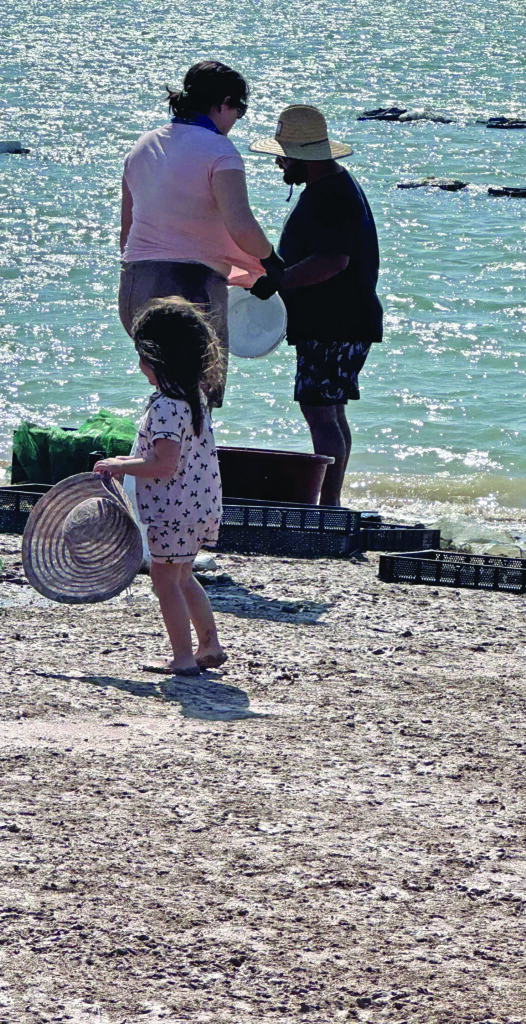
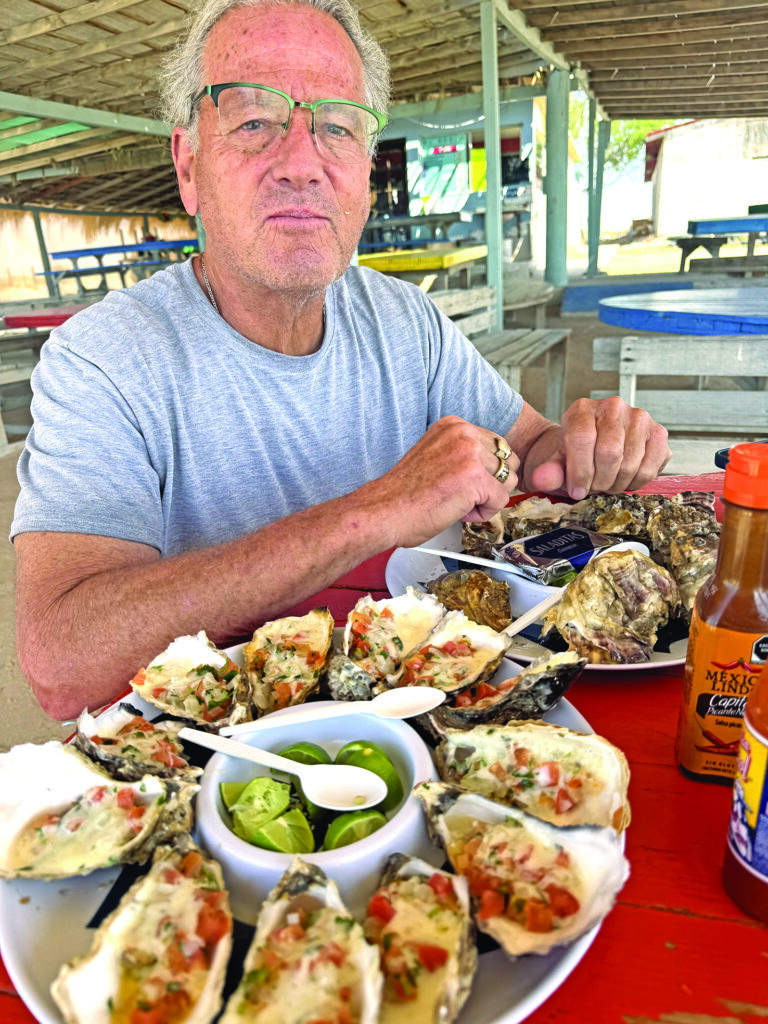
Recently, when we visited El Barco on a quiet weekday, we spotted a young family along the shore of the impossibly blue estuary tending their oyster cages from the back of their old truck. A young girl was running around on the mud flat while her parents harvested oysters. After filling their buckets, her father swam the oyster cages – tied to a thick piece of Styrofoam so they would float – back out to the steel cables anchored to the floor of the estuary. Our tranquil ocean gazing was interrupted by the arrival of our lunch from those same oyster cages. The food at El Barco is so fresh that I swear you are eating the essence of the sea – the gifts. The baked oysters, called ostiones gratinados, made with pico de gallo, cheese, and spices, are my favorite, along with the delicious shrimp quesadillas. My partner and our Mexican friends go for the raw oysters or ostiones crudos. The ceviche tostadas, aguachile, and cócteles are all prepared fresh to order.
I have been learning that oysters are an ecological powerhouse for both humans and the sea. They are able to survive in warmer waters and act as a beneficial filtration system for the tidal shallows, as well as providing relatively quick-growing, healthy, protein-rich food for us humans. The walls of El Barco are decorated with educational paintings depicting many of the creatures that live beneath the startlingly blue waters of the estuary. Resident porcelain crabs, worm eels, fiddler crabs, American oystercatchers, mud shrimp, and long-billed curlews are all labeled with English and Spanish names on the sides of the kitchen.
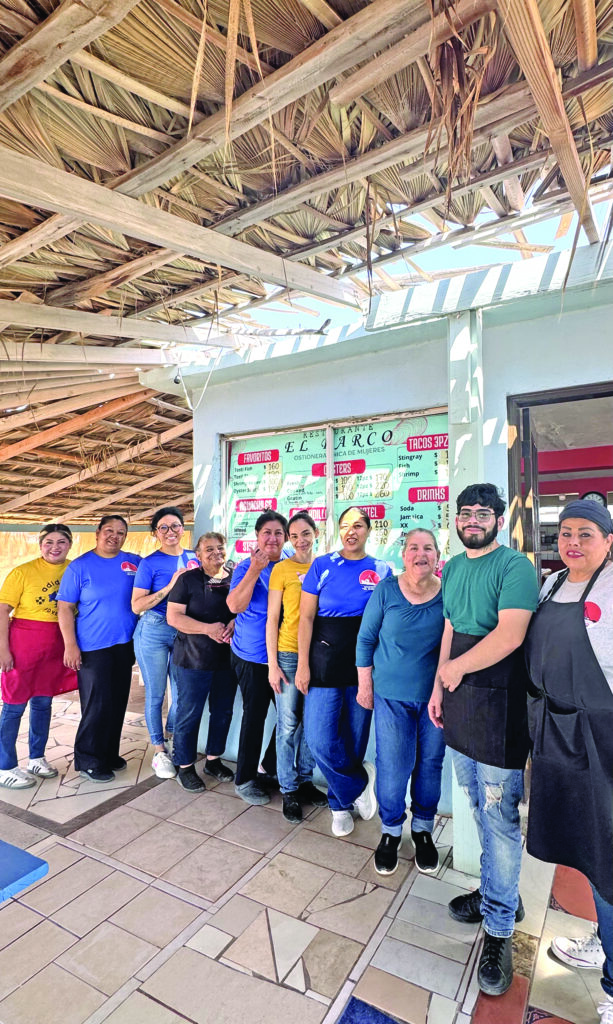
After our meal, we are greeted by abuela María Isabel and three generations of her family. Her grandson tells us that she has been farming oysters and cooking fresh seafood on the edge of the estuary with her family for over 40 years. He tells us that six families in the Women’s Cooperative take turns harvesting, cooking, and serving guests at El Barco each week. That explains why the cooked oyster recipe often has slight variations created by the cook of the week. The food is always fresh, bursting with the flavors of the sea, served by local families under the palapa perched on the edge of the turquoise waters of the Sea of Cortez.
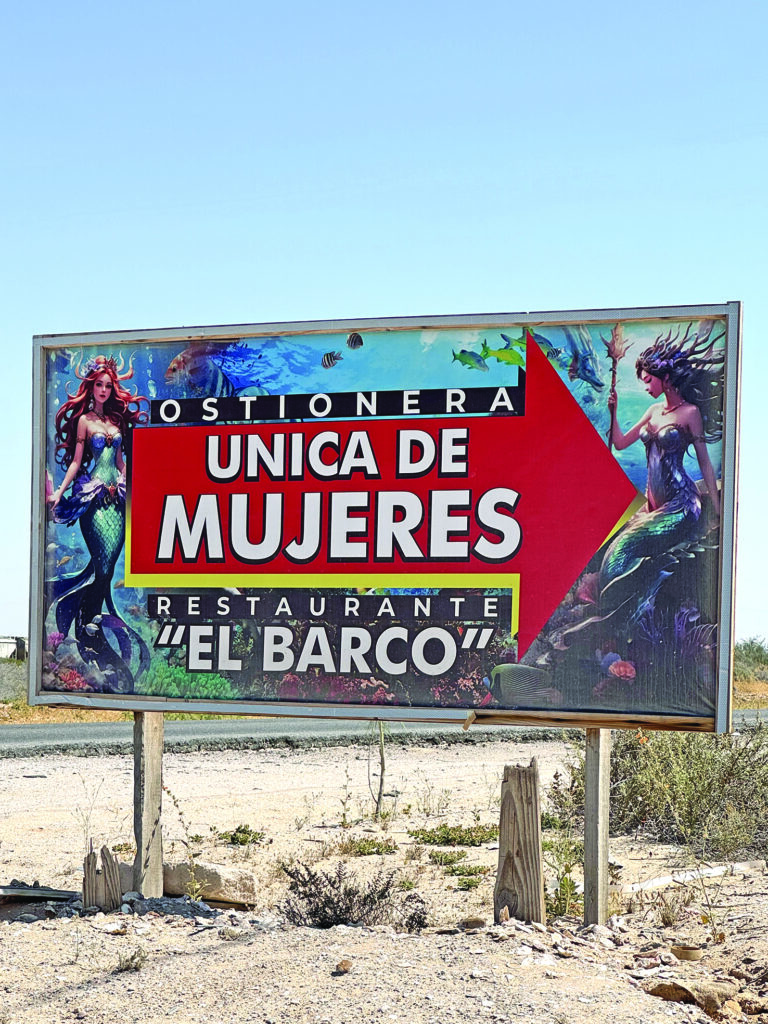
Heading east out of Peñasco on the Caborca Road, watch for the big signs to El Barco to find your own gifts of the sea – beautiful views of those dramatic super-high tides and amazing seafood to satisfy any craving for the taste of the sea.