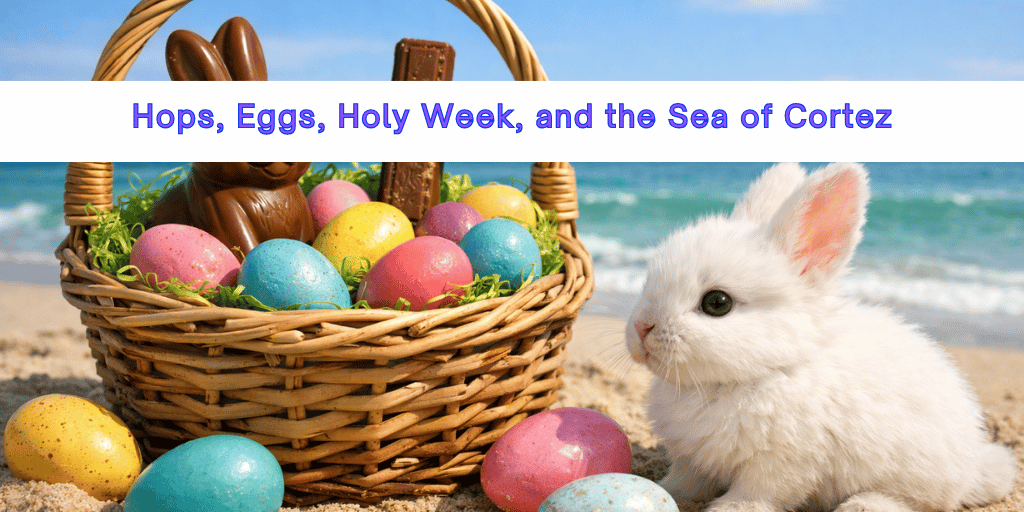
Let me tell you something that might blow your mind a little. The Easter Bunny is German. Yep. A German immigrant tradition brought to Pennsylvania in the 1700s – a mythical egg-laying hare called the “Osterhase” (that’s German for Easter Hare, not rabbit – yes, there’s a difference) – eventually hopped its way across the entire United States and became the candy-bringing, basket-filling, pastel-wearing bunny we all know today. German children would make little nests out of their bonnets (their BONNETS!) for the hare to leave colored eggs in. Those bonnets eventually became baskets. Those baskets eventually got filled with chocolate and jelly beans. And the rest, as they say, is Easter morning history.
But wait – it gets weirder. The word “Easter” itself? Also, not originally Christian. It traces back to Eostre (or Ostara), an ancient pagan goddess of spring and fertility. And here’s the fun part: nobody can fully agree on the details. The origin of the Easter Bunny is genuinely one of the great unsolved mysteries of holiday history. Even the Brothers Grimm weighed in. Jacob Grimm (yes, that Grimm) wrote about it in 1835. So, the same guys who gave us Cinderella and Snow White also gave us the Easter Bunny connection. You just can’t make this stuff up.
And speaking of heartfelt spins on Easter Bunny origins – I recently teamed up with author Adam Thomas to help bring his children’s book to life. Adam wrote it 25 years ago for his daughter Kate and read it to her kindergarten class. His book, Who Could Bear the Easter Bear?, puts its own warm and amusing twist on how the Easter Bunny came to be – think Brothers Grimm meets Disney, with a whole lot of heart. It’s available on Amazon and worth every page.
Now, the eggs. In the 13th century, eggs were a FORBIDDEN food during Lent. (I know. The horror.) So, people would decorate them during the fasting season just to make Easter Sunday feel that much more celebratory. Early Christians dyed eggs red to represent the blood of Christ. Ancient Romans colored them with vegetable dye and gave them to neighbors as spring gifts. Eggs have been symbols of rebirth for tens of thousands of years – engraved ostrich eggs dating back 60,000 years have been found in Africa. So long before chocolate bunnies and Peeps existed, humans were already pretty obsessed with eggs.
Speaking of candy – over 16 billion jellybeans are made in the United States EVERY year just for Easter. Sixteen billion! And 78% of Americans eat their chocolate bunny starting with the ears first. (Only 6% start with the tail. You know who you are.) Marshmallow Peeps weren’t even a thing until the 1950s. So basically, a pagan spring goddess, a German hare, some medieval egg decorating, and a bunch of 20th-century candy companies all got together and created the Easter we know in America. Quite the collaboration.
Now, here in Rocky Point, Easter is a whole different experience. Because here, Easter isn’t just a Sunday morning. It’s Semana Santa. Holy Week. And it is THE biggest religious holiday in Mexico, second only to Christmas in size and scope.
Semana Santa actually begins on Palm Sunday (Domingo de Ramos), where palm fronds are hand-woven into intricate crosses and brought to mass to be blessed. Good Friday brings something truly moving: hundreds of performers in period costumes reenact Jesus’s journey through the streets of Rocky Point in a Stations of the Cross procession – live hymns, narration by priests, and thousands of people lining the route. It culminates in a crucifixion scene at Calvary that you have to witness to understand. Easter Sunday morning begins with sunrise services right here on our beaches, which is about as beautiful as it gets.
And here’s one tradition that might surprise you: the Burning of Judas. On Holy Saturday, effigies of Judas – often stuffed with fireworks – are set ablaze in town squares across Mexico. It’s dramatic, loud, cathartic, and absolutely unforgettable. Another uniquely Mexican Easter treat is capirotada, a bread pudding made with cinnamon, cheese, raisins, and syrup specific to the Lenten season. Yes, cheese. In a dessert. Trust the process – it’s been a tradition for centuries.
But perhaps the most wonderful part of Semana Santa in Rocky Point? The beach. Semana Santa brings somewhere between 100,000 and 150,000 visitors to our little town during the two weeks surrounding Easter. Families from Sonora, Chihuahua, Baja California – they all come here. They camp on the beach. They stay for the WHOLE week, sometimes two. Mariachi and Banda musicians play right on the sand. Vendors set up with everything from fresh shrimp to (I kid you not) dried crickets. Bonfires at night, families cooking together, kids running in the waves. It is a full, joyful, loud, beautiful celebration of life, faith, family, and the Sea of Cortez.
If you happen to find yourself on the beach during Semana Santa and a local family invites you to share their food and celebration – say yes. Always say yes. You won’t forget it.
¡Felices Pascuas, Rocky Point! See you on the beach.