Situated between Highway 8 (that runs to Puerto Peñasco) and Highway 2 (that runs between Sonoyta and San Luis Rio Colorado) the famous volcanic area of “El Pinacate” is found uniquely within the natural beauties of North America. Declared a World Heritage Site by UNESCO in 2013, the Pinacate Biosphere Reserve is considered a Natural Wonder of Mexico.
The region covers a total area of approximately 2,000 square kilometers, in an oval shape of 70 kilometers at its center point, north-south, and 40 kilometers east-west, including the part corresponding with the United States to the north.
Almost the entire Pinacate area was formed by several eruptions of lava from one or more fountains of magma in the subsoil, giving origin to what is called a volcanic shield. It’s assumed that the eruptions ended about 1.2 million years ago, although the most recent cone looks to be only 180,000 years old – theories continue to be controversial.
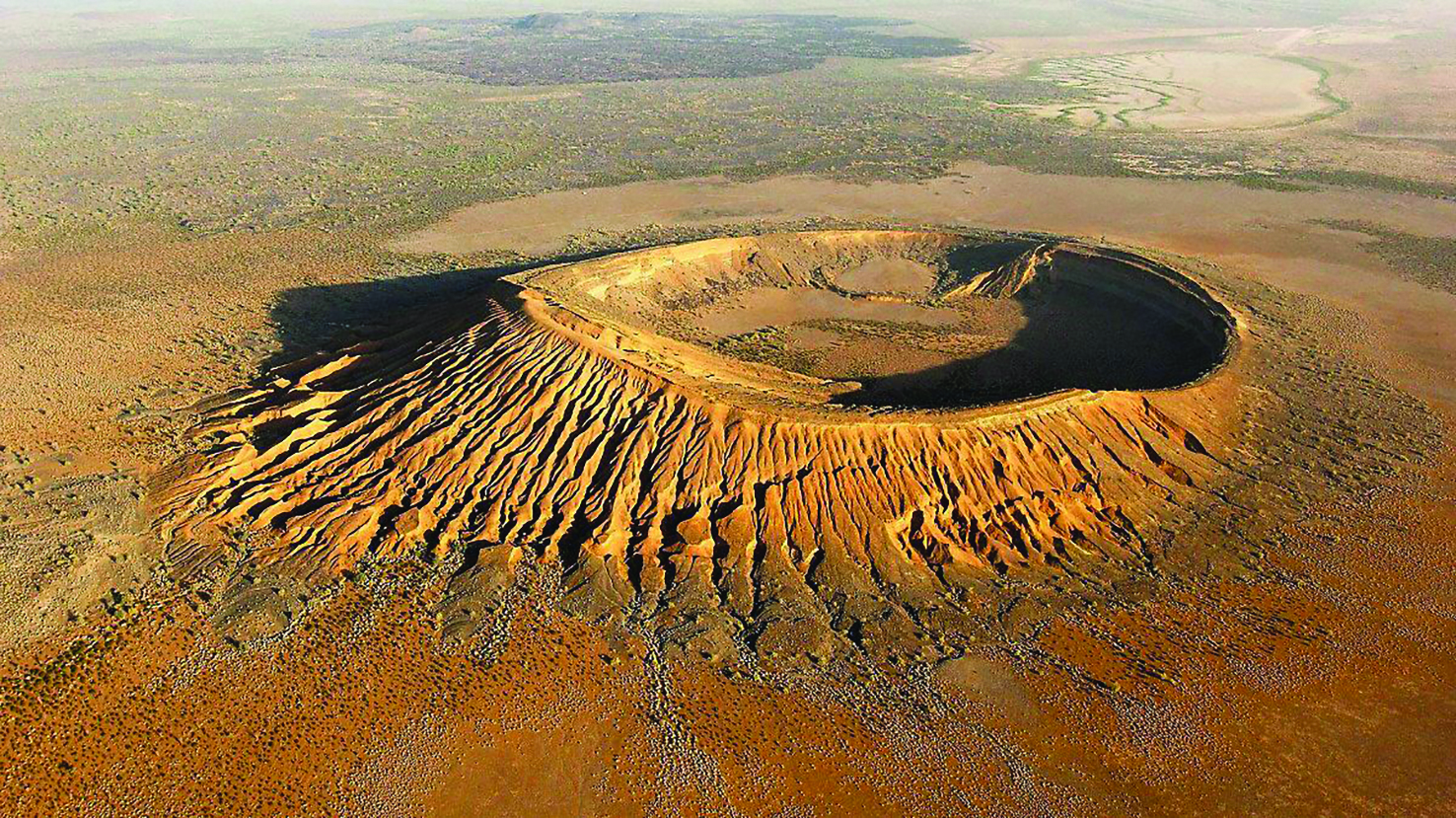
The highest peak, named by Father Kino “Volcan de Santa Clara” dominates the horizon with its height of 1,237 meters above sea level. In the surrounding area, cones of cinder-like lava and craters normally can be visible. Ten of the greatest and best known are in an arch surrounding the north part of the lava fields.
The craters of “Mars”, better known with the name of “El Elegante”, is where the astronauts practiced before they went to the moon. Some of the other better known craters are: “El Colorado, El Celaya”, El Salvatierra”, “El Kino”, and “El Macdougal”.
Other important characteristics of El Pinacate are constituted by its archaeology, which covers a record of human occupation of maybe 40,000 years from the San Dieguito complex to the Arenosos Pinocateños or Papagos of the sand. In some areas within the Pinacate Biosphere Region, visitors can see prints left by ancient habitants called “Tinaja de Los Papagos”.
The name of the Sierra is taken from the insect scientifically called Eleade Armata that is abundant there. The native Papago knew it as Tjuktoak (Black Mountain), and it is one of the most spectacular wonders of Sonora.
Reprinted from the RPTimes Newspaper 1990